Abstract
This study details the formulation and evaluation of granulated Ashtachoorna to enhance palatability , directly addressing reluctance to consumer acceptability, directly addressing the reluctance to consume the traditional salty-bitter powder. The new granule formulation , improves adherence. laboratory evaluations confirm the product’s quality, safety, and consistency, validating it meets required standards for consumer use.
Introduction
Contemporary dietary patterns, marketed by a pervasive reliance on commercial food products and a retreat from traditional home cooked meals, have instigated a widespread challenge to gastrointestinal well-being. This shift in eating habits adversely impacts the efficacy of digestive enzymes and gastric juices, contributing to a spectrum of debilitating conditions including acidity, bloating, gas and irregular bowel syndrome. These digestive disturbances are significant across all demographics, with children being particularly vulnerable to the negative effects of inconsistent eating schedules and processes foods.
From the perspective of Ayurveda, individual health equilibrium is governed by harmonious balance of the tridoshas- Vata, Pitta, Kapha. A pathological imbalance among these doshas is often rooted in the impairment of Agni (digestive fire), leading to the accumulation of (toxic metabolic residue). Ayurvedic therapeutics seeks to rectify this imbalance through classical formulations possessing Deepana (appetizer) and Pachana (digestive stimulant) properties, which effectively restore digestive homeostasis and facilitate the elimination of Ama.
Here, ashtachoorna stands a pivotal polyherbal formulation in this context. It is composed of eight essential ingredients that functions synergistically to enhance digestive function: Pippali (Piper longum), Maricha (Piper nigrum), Shunti( Zingiber officinale), Ajamoda ( Trachyspermum ammi), Hingu (Hebula asafoetida), Harithaki (Terminalia chebula), Saindhava (Rock Salt), Jeeraka (Cuminum cyminum). Unlike synthetic pharamceuticals, which frequently offer only temporary symptomatic relief, Ashtachoorna operates by addressing the fundamental etiology – restoring agni and doshic balance, there by fostering holistic well being.
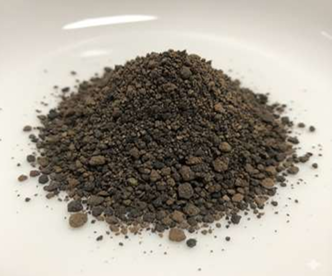
Granulation : Transforming Palatibility and Ensuring Compliance
Ashtachoorna powder formulation is severely hampered by its pronounced salty bitter taste. The inherent organoleptic barrier often renders children and others reluctant to maintain regular consumption, consequently limiting its practical application despite its proven therapeutic potential.
To surmount this critical taste barrier and enhance consumer acceptability and ease of use, a novel granule formulation of Ashtachoorna has been engineered. The granulation process allows for the strategic incorporation of excipients that mitigate the unfavorable taste: sugar candy- is integrated to introduce a sweet taste combined with the pungent salty taste, ghee added, which aids in improving digestion by lubricating the intestinal tract and buttermilk inclusion enhances appetite.
Traditionally, Ashtachoorna is directed to be consumed after being mixed with buttermilk. However, the granulated form, incorporating these beneficial additions, significantly elevates overall palatability and offers a ready to eat optimally user-friendly option for gastrointestinal health. This improvement in formulation makes the medicine more accessible and actively encourages consistent adherence and regular use, there-by helping to reduce reluctance to take it. Further-more, the heating of the material post- pulverization of the choorna contributes to the maintenance of a well- maintained shelf life.
Laboratory Validation: Quality, Safety & Consistency
The modifications inherent in the Ashtchoorna granule formation are comprehensively substantiated by laboratory evaluation, ensuring the product’s quality, safety, and consistency. These laboratory evaluations validate that the formulation meets the required standards for consumer use.
Sensory analysis: the sensory profile of the granulated product was rigorously assessed through sensory analysis, a primary and indispensable quality evaluation. this professional assessment confirmed a distinctive granulated appearance. Critically, preliminary sampling among individuals experiencing gut issues demonstrated positive results, affirming the products effectiveness.
Ph determination: the ph of ashtachoorna often exhibits a slightly acidic range (5.0- 6.5). this parameter is critical as it dictates how well the active components are absorbed within the gastrointestinal tract.
Loss on drying: LOD is a vital test for quantifying the moisture content, which must be maintained under 6%. This metric is essential for both assessing the product’s shelf life and identifying potential vulnerabilities to fungal growth spoilage.
Ash test: the ash test is performed to ascertain the total quantity of inorganic (non-combustible) residue present following the complete incineration of the organic matter. The typical range for this residue is 3% to 7%.
Sieve analysis: this method utilizes mesh sieves to determine the particle size range of the granulated substance. It is fundamental for understanding the fitness, consistency, and quality along with its stability within the final formulation.
Angle of repose (secondary test): this test is employed to assess the flow properties of the powders and granules.
Crush tester (secondary test): this instrument is utilized to evaluate the strength and chewability of the granules.
Sampling Methodology and Therapeutic Outcomes
Itoozhi Vaidyashala, the renowned ayurvedic hospital and production unit in Kannur, is pioneering an innovative pharmaceutical study focused on improving patient comfort and adherence by converting classical medicines into user friendly and highly palatable modern formulations. Their one of the study by an in-house research team, centered on transforming traditional Ashtachoornam powder into a granular form, has yields significantly positive results in a selected patient group, particularly addressing their stomach and excretory concerns. This successful study validates the effectiveness while retaining their therapeutic efficacy, making a step forward for ayurvedic pharmacology.
Conclusion
The development of granulated ashtachoorna represents a significant advance in drug delivery, addressing the primary hurdle of poor consumer compliance associated with the traditional, salty- bitter powder formulation. The goal was to enhance palatability and ease of daily consumption. The new formulation achieves this by integrating ingredients which successfully, mitigate the unfavourable taste and offer ready to eat, user friendly option.
Furthermore, the formulation quality, safety, consistency of this granulated ashtachhorna is ensured through rigorous laboratory evaluations and sampling. In sum granulated Ashtachoorna successfully merges traditional ayurvedic transforming a classical medicine into an accessible, highly compliant product.
References
References could be furnished on request
Contributors
- Dr Amala T O (BAMS , DAC) – Production Controller – Pharmacy (Itoozhi Vaidyashala)
- Mrudula MP (M.Sc. Food Science and Technology) – Quality Assurance Analyst (R & D) Itoozhi Vaidyashala
- Naina Banu K ( M.Sc. General Biotechnology) – R & D Quality Controller, Itoozhi Vaidyashala